Watch
Watch. Learn. Reflect.
Educational presentations, interviews, summit sessions, and practical insights designed to deepen understanding and encourage meaningful reflection.
Coming Soon

Curated resources, trusted education, meaningful stories, and practical tools. Understand what happened, find support, and move forward with clarity.
More than a book. A growing collection of resources, conversations, education, and support.
Whether your DNA discovery happened yesterday or years ago, there is no single right way to navigate the NPE experience. Some people begin by seeking understanding. Others need connection, practical guidance, or simply reassurance that they are not alone.
Explore the resources below in whatever way feels most helpful to you. Each has been thoughtfully created or curated to help you better understand your story and move forward with greater clarity.
Explore thoughtful conversations about identity disruption, trauma, family secrets, healing, and the emotional realities of unexpected DNA discoveries.
Educational presentations, interviews, summit sessions, and practical insights designed to deepen understanding and encourage meaningful reflection.
A practical guide to understanding identity disruption, healing, and moving forward after an unexpected DNA discovery.
Find trusted organizations, peer support, educational communities, and opportunities for connection within the broader NPE community.
Browse recommended articles, organizations, books, research, DNA-search resources, services, and practical tools.
Download the free guide introducing identity disruption, trauma adaptation, and practical first steps toward understanding your experience.
NPE is commonly used to mean Not Parent Expected or Non-Paternity Event. It describes a situation in which DNA testing reveals that a person's biological parentage is different from what they previously believed.
An unexpected DNA result may reveal misattributed parentage, donor conception, adoption, an unknown biological parent, or previously unknown siblings. It changes a person's understanding of their family history.
These discoveries can affect more than genealogy. They may disrupt a person's sense of identity, belonging, family relationships, medical history, cultural connection, and trust in the story they have carried about themselves.
Reactions may include shock, grief, anger, relief, confusion, curiosity, betrayal, isolation, or a strong need for answers. There is no single correct response and no universal timeline for making sense of what has changed.
An unexpected DNA discovery may change what you know about your biological history, but it does not erase the life you have lived or determine who you become next.
There is no single right way to navigate an unexpected DNA discovery. Some people immediately begin searching for answers. Others need time to process, seek counseling, or learn from others. Some just need to hear that what they feel is understandable.
Healing is rarely linear. The goal is not to rush toward a particular outcome, but to understand yourself, integrate what you have learned, and move forward in a way that reflects your values, relationships, and lived experience.
Learn about identity disruption, trauma adaptation, grief, and why intense or conflicting reactions can follow an unexpected discovery.
Seek trusted organizations, professional support, meaningful conversations, and connection with people who recognize the complexity of the experience.
Explore how new information can become part of your identity without erasing the relationships, memories, and life you have already lived.
Move forward with clarity, stronger boundaries, and self-understanding, and the freedom to make choices aligned with who you are becoming.
Begin exploring identity disruption, trauma adaptation, emotional stabilization, and practical first steps toward understanding your experience.
Download the Free GuideAn unexpected DNA discovery can affect far more than biological information. It can change how someone understands their history, relationships, identity, and place within a family.
The emotional impact may involve grief, anger, betrayal, confusion, relief, curiosity, or a sense that the story you have carried about yourself no longer fits. Even when the discovery answers long-held questions, it can create new ones.
This experience is sometimes described as identity disruption: a period in which previously accepted beliefs about who you are must be reconsidered, integrated, and understood in light of new information.
The goal is not to erase the life you have lived. It is to make room for the truth, understand what it means, and decide how it becomes part of the story you carry forward.
Questions about ancestry, culture, family roles, and where you fit may suddenly feel uncertain.
Family secrets and incomplete histories can alter how you view parents, siblings, partners, and other important relationships.
You may grieve people, relationships, histories, or possibilities that never existed in the way you believed they did.
Moving forward often requires integrating new information into a more complete understanding of yourself.
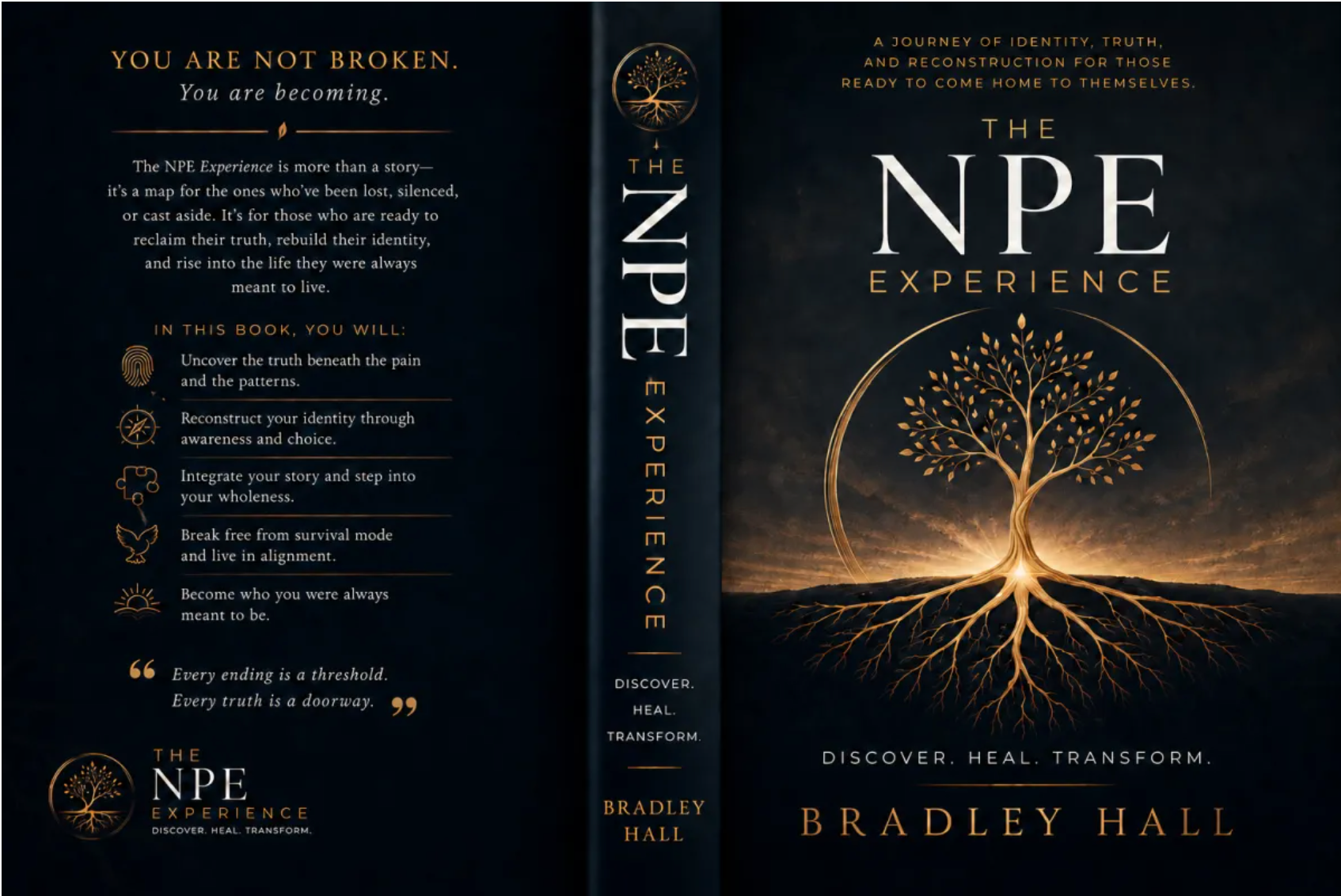
A Practical Guide to Identity, Healing, and Moving Forward After a DNA Discovery
Written by Bradley Hall, The NPE Experience combines lived experience, psychological insight, and practical guidance to help readers make sense of one of life’s most identity-shifting discoveries.
More than a memoir and more than a psychology book, it explores how unexpected DNA discoveries reshape identity, relationships, family systems, and the stories we carry about ourselves.
The book offers a practical framework for understanding what happened, integrating the truth, and choosing how to move forward with greater awareness and intention.
Join the Book List to receive updates, behind-the-scenes insights, chapter previews, and release announcements.
Join the Book ListUnexpected DNA discoveries often create more questions than answers. These responses offer a starting point for understanding the experience and deciding what may be helpful next.
An NPE, meaning Non-Paternity Event or Not Parent Expected, is an unexpected discovery that the person you believed to be your biological parent is not. Today, the term covers many DNA discoveries, including donor conception, adoption discoveries, misattributed parentage, and other family revelations uncovered through genetic testing.
A DNA surprise affects more than biological information. It can challenge identity, family relationships, trust, belonging, medical history, and the personal story you have carried your whole life.
Many people feel grief, confusion, relief, anger, or curiosity, sometimes several at once. These reactions are common and understandable.
No. This page focuses on unexpected DNA discoveries, but many of the ideas here apply more broadly. Identity disruption, trauma adaptation, grief, and rebuilding after a life-changing event are relevant to anyone navigating a significant personal transition.
There is no universally correct answer. Every situation is unique. Before making contact, it often helps to understand your motivations, consider the possible outcomes, set healthy expectations, and seek support from people familiar with the complexity of DNA discoveries.
Start by giving yourself permission to slow down. You do not have to make immediate decisions. Learn about identity disruption, connect with trusted organizations, and seek support from people who understand.
The free Identity Reset Guide is a practical place to begin.
Yes. An unexpected DNA discovery may permanently change your understanding of your story. It does not have to define your future.
Many people find clarity, healthier relationships, self-understanding, and renewed purpose as they integrate the experience.
You can keep exploring through:
Not yet. The book is in development. Join the Book List for updates, chapter previews, and first word when it releases.
Join the Book ListYou do not have to understand everything today. Clarity often develops gradually through time, support, reflection, and reliable information.
An unexpected DNA discovery may change how you understand your past, but it does not determine the rest of your life.
You can continue learning, find support, integrate what happened, and choose how you move forward with greater clarity, awareness, and intention.